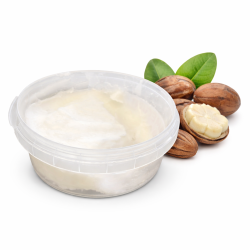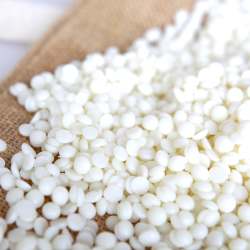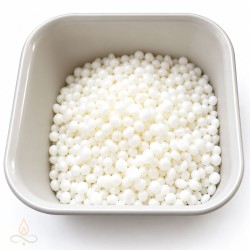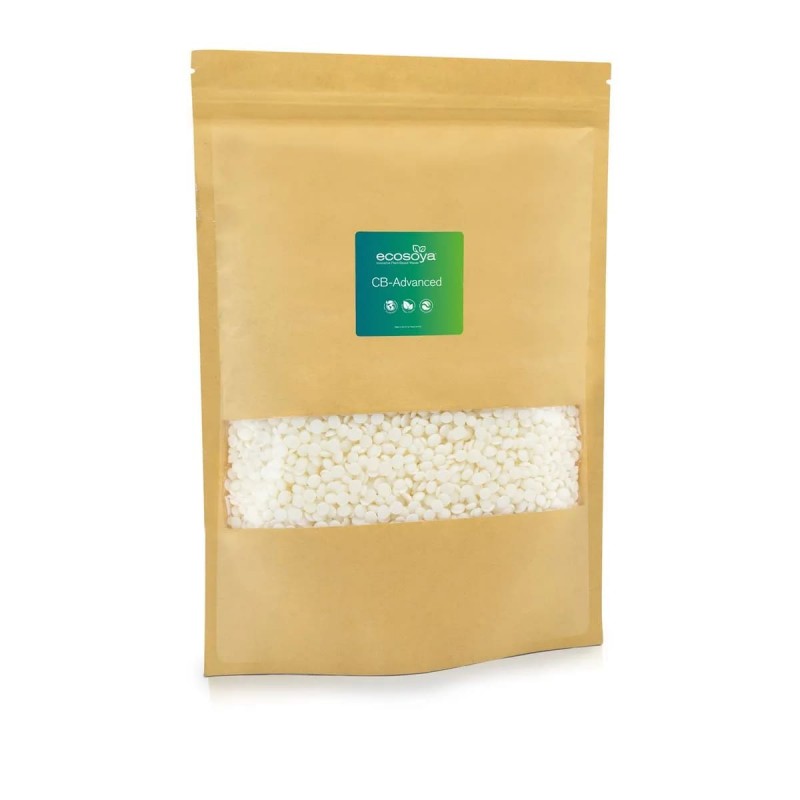


EcoSoya CB-Advanced is a fully formulated, single pour, all-natural soy container wax that requires no additives.
EcoSoya CB-Advanced is the advanced container blend in our range and has excellent scent throw and glass adhesion and pours with a smooth level surface and highly resistant to frosting. This wax can take a fragrance load of up to 12%.
We recommend heating this wax to around 70 degrees to melt and pouring at 60 degrees. Add fragrance as close to pour temperature as possible for optimum results.
There are handy instructions below in the Description section to help you achieve the best results!


Decide on the size of the container you would like to use, and choose a wick that is suitable. Natural waxes require a larger wick than traditional paraffin waxes. Wick your container by placing your wick centrally in the container, you can use wick stickers or melted wax to adhere your wick to the container.
Weigh your wax to ensure you have the correct quantity for your container. Heat EcoSoya to 75°C to melt. Do not heat to above 90°C for prolonged periods. Molten wax can be safely stored for up to a week, cool the wax to 60°C and cover.
Choose fragrance oil and colour which is suitable for use in natural wax. Allow the wax to cool to 60°C then add the fragrance oil and gently stir for 2 minutes to combine.
Pour immediately after adding fragrance oil. If you are not using fragrance oil, pour at 60°C. We recommend heating your container to ensure optimum glass adhesion.
Leave your candles to set for at least 48 hours at room temperature (around 20-25°C). Once the candle has cured you can start to test for things such as burn pool diameter and quality.
To improve a candle’s performance, it’s a good idea to test for one variable at a time to isolate a cause and change its effect.
Variables may include: container, wax, dye, fragrance, wick, pour temperature, manufacturing conditions and environmental conditions such as cooling temperature. Once you’ve found the ideal conditions you should then try and replicate these as closely as possible for future batches.
If you’re encountering any problems then you can try the following:

Data sheet
EcoSoya CB-Advanced is a fully formulated, single pour, all-natural soy container wax that requires no additives.
EcoSoya CB-Advanced is the advanced container blend in our range and has excellent scent throw and glass adhesion and pours with a smooth level surface and highly resistant to frosting. This wax can take a fragrance load of up to 12%.
We recommend heating this wax to around 70 degrees to melt and pouring at 60 degrees. Add fragrance as close to pour temperature as possible for optimum results.
There are handy instructions below in the Description section to help you achieve the best results!