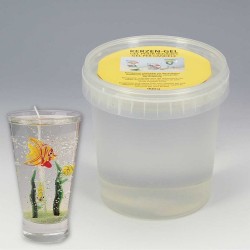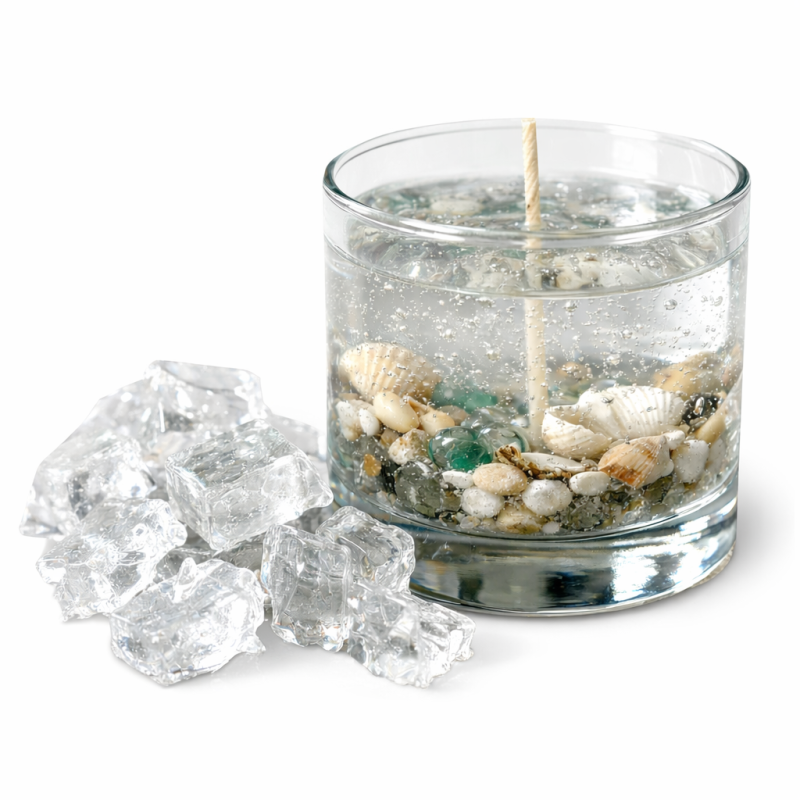


Paraffin gel is a high-quality gel wax with excellent clarity and flexible texture. It is characterized by great viscosity and a long burn time, making it ideal for creating decorative candles with embedded ornaments. Its transparent formula allows for visually appealing and expressive compositions.
Paraffin gel can be colored with special candle dyes and enriched with fragrances to create a unique atmosphere.
Paraffin gel is a mixture of paraffin oils that does not dissolve in water and burns with a bright, clean flame.
Gel wax does not require additives other than fragrance and colour. Old or partial candles may be remelted and reused. However, it is advisable not to heat the wax above 85°C for extended periods. Store wax in a cool, dry place away from direct heat, sunlight, and moisture.
Use clean moulds or containers free from contaminants. They should be at least at room temperature; pre-heating to approximately 45–50°C can improve results.
For gel candles, glass containers must have thick walls and should not narrow towards the top. Do not use damaged glass. Containers with a large diameter (over 7 cm) may negatively affect burning quality.
Heat gel wax gently using a bain-marie (water bath). Recommended working temperature is around 80–90°C. Temporary higher temperatures (up to 120°C) are acceptable if the wax is cooled quickly, but overheating may cause discoloration.
Avoid contact with water, as droplets will cause cloudiness. Stir the gel while melting and use stainless steel equipment. Avoid copper and zinc, as they may accelerate discoloration.
Most dyes are suitable for gel wax. Powder and liquid dyes are preferred as they maintain clarity. When using powder dyes, heat the wax to approximately 95°C and mix until fully dissolved. Dyes can also be pre-mixed with fragrance before adding to the wax.
For richer colours, a small amount of black dye can be added. Limit the use of mica, as excessive amounts may clog the wick and negatively affect burning performance.
Use only non-polar fragrances at levels of 5–8%. Fragrances with flash points below 77°C should be avoided. Some fragrances may react poorly with gel wax, causing bleeding, surface defects, or poor flame quality—especially polar fragrances.
Fragrance performance depends heavily on correct wick selection and burn pool size.
Gel wax typically requires larger wick sizes than traditional waxes. The correct wick depends on fragrance, colour, and candle design.
Keep wicks trimmed to approximately 6 mm (¼ inch). Always test burn candles after allowing them to cure for 48 hours.
Pouring temperature depends on the desired effect and materials used. For maximum clarity, pour at 105–110°C. Lower temperatures may reduce air bubbles but increase viscosity.
For best results, pre-warm containers and pour slowly. Add fragrance immediately before pouring and mix thoroughly.
Pour a small layer (approx. 1 cm) of gel into the container. Position the wick in the centre and secure it upright. Allow this layer to cool before adding decorative elements.
Fill the container with gel. To position decorative elements at different heights, pour the gel in layers, allowing each layer to cool before adding the next.
Allow candles to cool undisturbed at room temperature (around 25°C). Let candles cure for at least 48 hours before burning.
Gel candles typically have a smaller flame than traditional candles but burn longer.
Test burning is essential to ensure proper wick performance. Check burn pool size, flame stability, and for “mushrooming” (carbon buildup on the wick), which can cause soot and odours. Adjust wick type if necessary.
Data sheet
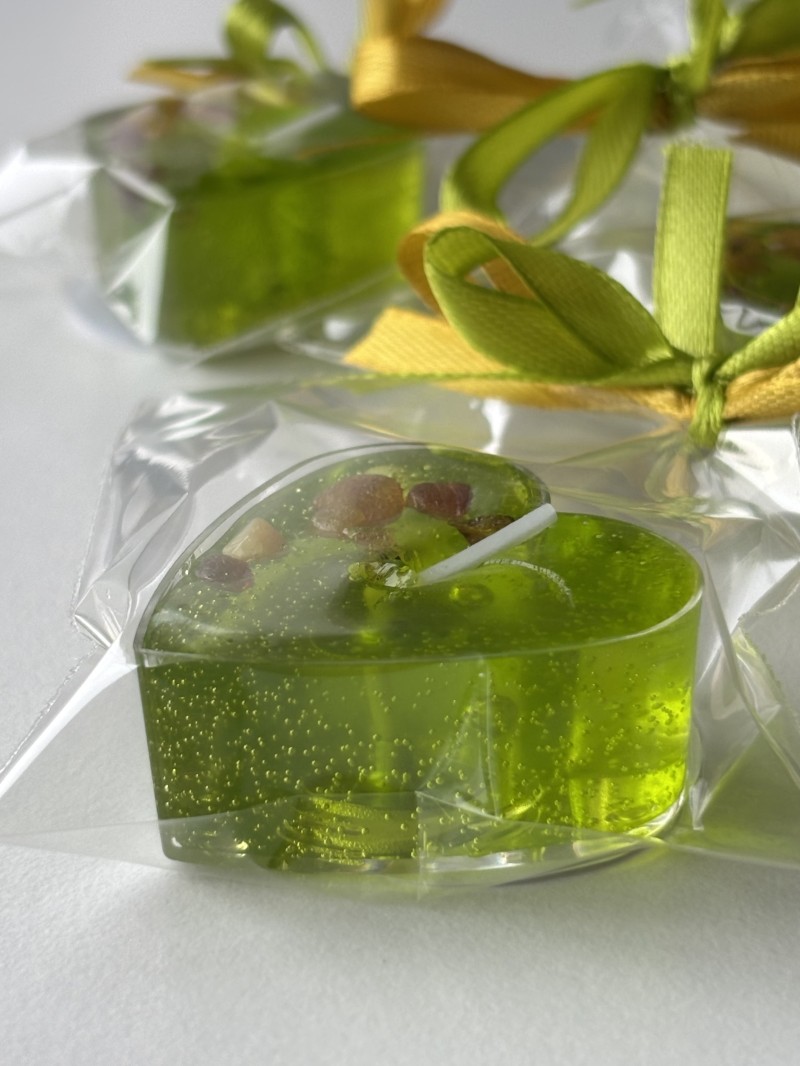
Paraffin gel is a high-quality gel wax with excellent clarity and flexible texture. It is characterized by great viscosity and a long burn time, making it ideal for creating decorative candles with embedded ornaments. Its transparent formula allows for visually appealing and expressive compositions.
Paraffin gel can be colored with special candle dyes and enriched with fragrances to create a unique atmosphere.
Paraffin gel is a mixture of paraffin oils that does not dissolve in water and burns with a bright, clean flame.